Instead of writing the usual book review, I decided to try a different approach - a Q&A. As a Filipino I'm always happy to find more pinoys reading and writing books. So I would like to talk about Mayet and her novel with the hope that more people would learn about it and read it too.
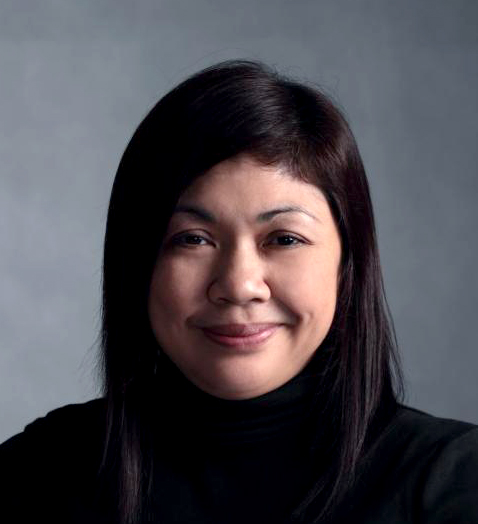 |
| Mayet Ligad Yuhico |
According to the novel's website,Fourteen Days is the story of world-famous actress Auberon Wallace whose mother dies and leaves a will asking her to read hundreds of unopened letters from her former husband Luke Scoprire. The letters compel her to explore events that have happened years ago, events she had never acknowledged till now. With the will containing a condition that the letters would be burned fourteen days from her mother’s burial, Auberon is forced to confront the past, no matter how painful it is.
A novel on love, loss and redemption, Fourteen Days is a 120,000 word contemporary, romantic novel divided into fourteen chapters: each chapter a day in the life of Auberon as she embarks on an extraordinary journey wrestling with her Mother’s wishes to confront the past against her own need to create a future between two men who has shaped her life into what it is now.
Q&A With Mayet Ligad Yuhico:
1. As a Filipino writer, what made you decide to set your first novel in America, and have have main characters who were Americans (i.e. instead of Filipinos?)
Some authors process the plot and characters in their head, as in the case of Pulitzer winner Edward P. Jones who wrote the plot of “The Known World” in his head for ten years. His novel was cited by Time as one of the best novels of the decade (2000-2009).
In my case, it is when I write that characters and plots reveal themselves to me. As in the process of creation, the work takes a life of its own. Sometimes, even if I wanted a certain course of action to happen, the characters have a say in what happens. So I’m just a medium for all these creative plots happening in an alternate universe. Of course, the writer provides a framework, and has the final say in the end product.
(And so, this is what I’ve always told fledgling artists who dream of finishing a novel, or any work of art. The best way to create is just to flex that creative muscle every single day. Just do it!)
In the case of “Fourteen Days”, I did not deliberately set out to situate my novel in America, nor create characters that were Americans. The fact that Auberon’s early childhood was spent in the Philippines technically makes her a Filipina since she knows the language, and is familiar with the culture of the Filipinos, as evidenced by her love of Philippine soul food – merienda fare like turon and ginataan!
I just wanted to write a novel that I wanted to read, and I’ve always been drawn to characters facing impossible situations. I wanted to see how two people with the most fortunate of circumstances face these herculean challenges in their life.
What’s more herculean than a billionaire and a top Hollywood actress, who both seemed to live charmed lives, but had a past that continues to haunt them till present day?
The perfect backdrop for these two characters is New York, where Luke’s corporate office was based. Auberon was a painter before she became an actress, and I’d imagined she would have loved to roam around the museums all day to draw inspiration, or to while away her time when she’s free. If a painter had the means to choose any location in the world as a home address, New York would make sense because the major museums are all accessible by walking. This is the reason why I decided to let Auberon live in 5th Avenue, which is spitting distance from the Metropolitan Museum of Art.
2. Tell us about Ava's character. She is a famous movie star and her story brings the reader into the world of filmmaking, including on location shoots, make-up, costumes, the works. What/who was your inspiration behind her character? Did you have to research about the lives of famous actresses?
I worked in PETA (Philippine Educational Theatre Association) while I was in college and post-college. It was one of the most defining periods in my life as I was exposed to artists who eventually became pillars of filmmaking in the country – LinoBrocka, Joel Lamangan and SoxyTopacio comes to mind.
The creative process was so intense under these demanding taskmasters that I felt like I completed a graduate degree in theatre when I was exposed to these mentors. I also saw how difficult being an actor was, since one used body, mind and soul, to make a character come to life.
The role and function of an actor remains the same whether it is in the theatre, movies or television, all accoutermentschange - the make-up, costumes, the set conditions depend on which medium is used.
My inspiration for the young Auberon as an artist is a composite of all the visual artists I have known and met here and abroad. I’ve attended some workshops at the Scottsdale Artists School, and based many of the scenes in the novel on the school and its environs.
My inspiration for Auberon as a film star is a composite of all the major actresses in Hollywood who are under the constant glare of the paparazzis. There is not one interview I’ve read of actresses who really enjoy the glare of the spotlight. After the initial rush of fame, most of the actresses feel objectivized, like moving targets in a shooting gallery.
3.What about the character of Luke Scoprire? Was his character inspired by anyone in particular?
Can I answer that posthumously?
This is quite funny, but my inspiration for the young Luke is the opposite of my husband. Not young Luke’s possessive qualities, but the reverse.
I met my husband when we were teenagers, and all the time that I was working in theatre, going home early in the morning after a particularly hectic night of rehearsals, my then boyfriend never complained, nor asked me to give up my love for the theatre. I just felt that it was extraordinary discipline on his part not to stifle me in my growth as an artist. Even at that young age, he was very unselfish and let me live my life the way I wanted to.
I was wondering what I would do, if like Auberon, the opposite situation presented itself. I guess she would have bolted from the relationship the very second she’d realized how stifling this relationship is.
Luke Scoprire was a very brash, possessive individual in his youth, and I based his character on the tech moguls who earned their first billion in their 20’s – Apple’s Steve Jobs, Facebook’s Zuckerberg and Twitter’s Jack Dorsey come to mind. It takes a lot of ego to believe in an idea, and shepherd it till it becomes a reality, and usually these young moguls had the same characteristics as the young, brash Scoprire.
What is interesting is how Luke Scoprire changed when he saw how devastating his actions were to a free spirit like Auberon. And there, Luke’s metamorphosis happened as the novel progressed.
4.Fourteen days is a love story that is also mixed with a bit of mystery surrounding Ava's accident and her relationship with her former husband Luke Scoprire whom she remembers nothing of. What gave you the idea of the letters which she has to read in 14 days?
I was inspired by my friend Evelyn Talamayan’s heart-wrenching story of surviving an operation to remove a big tumor in her brain. After she regained consciousness, her memory was gone. At the time of the operation, she was married with two small kids. Evelyn had no memory of them when she woke up. She also couldn’t read or write simple sentences. In short, all cognitive processes were wiped out.
But when her husband approached her, and introduced himself as her spouse, she responded to him and believed him. Although all cognitive processes were gone, the memories of the heart could not entirely be erased. It was Evelyn’s husband who taught her how to read and write again, and in two years, she was back at her job. Evelyn eventually emigrated to Canada, and the last time I met her around eight years ago, she was finishing her PhD studies.
In Ava’s case, when Luke introduced himself as her husband after the accident, she reacted violently and did not believe him. So I thought, what would Luke do after this devastating accident? I would think that Luke would be in need of an activity while Auberon was in a coma. Writing letters to her would be logical, since he had been writing to her ever since they met.
In the end, it was the letters which Auberon’s mother retrieved from the trash can that meshed the whole story to its completion.
5.What was the role of the Romney paintings in the story? (I have my theories but I would like to hear it from you :) )
I saw the Romney painting at the Frick museum, and as I’ve written in the novel, the very feelings Auberon felt, were also experienced by me.
It was painted three hundred fifty years ago, but I felt like Emma Hart was alive in the flesh. It was like a literal thunderbolt hitting me. I was flabbergasted. It was an out of body feeling, and as a painter myself, I knew that Romney, the person who put oil on linen, who painted her for a period of time was so in love with her, that the emotions he had when doing the painting could still be felt by the viewer at present time.
And so I used the Romney painting to serve as an emotional bridge between Luke and Auberon’s past and present.
6.You are a visual artist, but you are also a writer with two published works including Fourteen Days. Would you consider yourself as an artist first and a writer second, or the other way around? Why?
"The Blue Gift" by Mayet Ligad Yuhico

I enjoy being a writer and a visual artist since it uses both sides of the brain.
As a writer, I feel that I use the left brain more, since I use logic, analytical thinking to process the very complicated rules of the English language.
In painting, I use colors that do not even have a formal name, or create imagery which could not be explained by words, completely opposite of the left brain functions.
I just consider myself an artist, period. The tools change, whether it’s pen or a brush. I am just happy using all my talents to exhaustion. I would love to live to a hundred, since I still have so many books to write, and paintings to put on canvas.
If my works of art give pleasure to other people, my happiness is inestimable.


